


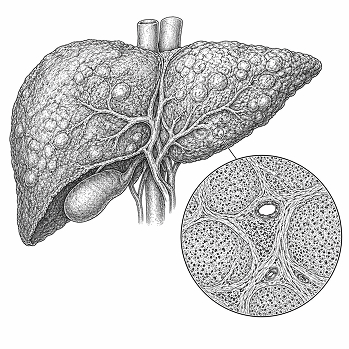
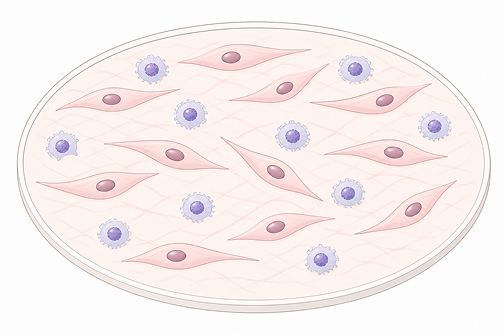
Activation and proliferation of human stellate cells is strongly dependent on the extracellular matrix components and simultaneously impacted by the transformation of the Kupffer cells and subsequent inflammatory signalling. Hepatocytes are both participants and the victims of this process. Type II Diabetes and MASH are both changing the physiology of liver and cellular interactions within it. Many system exist to efficiently model the cellular components interactions, involving organ-on-chip or microphysiological systems. However, lack of native ECM component does not allow to predict the remodelling and its impact on the organ’s physiology. As well, it avoid and important issue: how to reverse liver fibrosis? To predict those effects, we build up the stellate cells-ECM co-cultures as well as complex liver spheroids, including from patients suffering from metabolic diseases.
Stellate and Kupffer cells, embedded into the isogenic ECM
Complex ECM-embedded liver spheroids for inflammation and fibrosis modeling
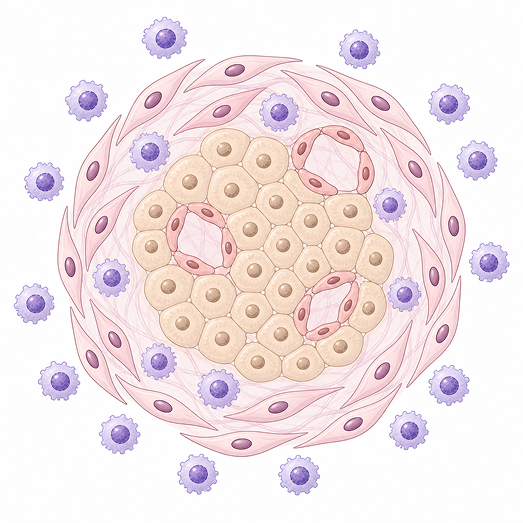
Components which can be incoprorated
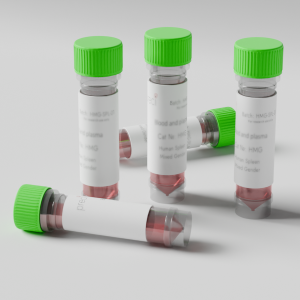
Liver disease range
- MASH
- Type II diabetes
- Liver fibrosis
- Liver cholestasis
Assays validated
- Contraction and solidification of ECM
- Kupffer cells activation
- RNAseq targeting remodelling biomarkers
- Stellate cells transformation
- Hepatocytes death
- pAkt induction
- Albumin secretion
- Glycogen accumulation and depletion